
So, about a week ago I saw a tweet about how in the recent history of the NBA, scoring champions haven’t fared as well with their team’s success as in the past. While the statement was true, initial research into the topic gave a few reasons for why this was. Looking deeper, it also makes sense as to why this phenomenon doesn’t happen more often. And, since the NBA has been around for quite some time now, there’s a wide variety of scoring champions available to give us plenty of fun stories and data.
Now, to lay some ground rules. I only took data from seasons post merger, meaning that any ABA stats, or scoring champions, or champions in general, will not be included or looked at. Also, scoring champions will be assessed based on how far their team played into the playoff with regards for their final regular season seeding. With that said, here’s what I found…
Players to win the championship after being crowned scoring champion…
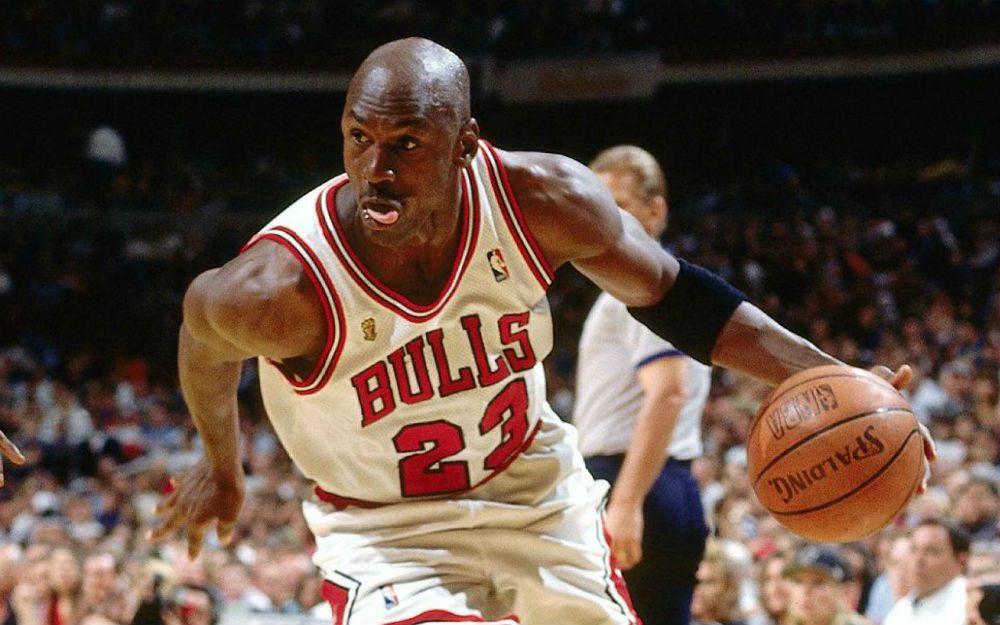
It’s been done seven times by two players. Jordan and Shaq. That’s it. And Shaq only did it once. It was something I didn’t know until doing research for this but Jordan led the league in scoring for each and every year of both of his three-peats with the Bulls. Jordan would also make the list on four other occasions, but all of those were from his younger years when he ran into the Bad Boys Pistons earlier in the playoffs. But for those six years where the Bulls won it all, it was unusual for a player to not only lead the league in scoring, but also have their team dominate for the whole season. Six times. But that’s Jordan.
As for O’Neal’s case, his double champion season occurred in the 99-00 season with the Lakers, where they finished as the one seed in the west with 67 wins. O’Neal put up 29.7 points, 13.6 rebounds, and 3.0 blocks a game with a still pretty young, 21-year-old Kobe Bryant as the second option. Now, with the Lakers ending the season as the one seed, you would expect them to at least make the finals with them being the top team in the west record wise. It also would not have been a big ask for them in the 2000 season to beat whoever came out of the east as the Lakers finished a whole 11 wins ahead of the first seeded Pacers. But it didn’t happen without any drama. The up-start Kings with a breaking out Chris Webber took them to five games in the opening round. Then, in the western conference finals against a good Trail Blazers team, the Lakers gave up a 3-1 series lead and weren’t looking too good in game seven, until a big comeback fourth quarter lead by O’Neal changed the tides and history books. (The footage is peak 2000’s but it’s worth the watch.) He would then go on to dominate the Pacers in the finals and earn himself royalty by joining Jordan as the only player to win the scoring title and the title title.
Scoring champions who made the finals and lost…
Remember how I mentioned that since O’Neal’s Lakers were the one seed with the best overall record, then they should be expected to win it all? Yeah, so that statement is really only true if your name is Michael Jordan. The finals are where scoring champions on first seeded teams go to lose. Of the five players not named Jordan to win the scoring title and have their team finish as the one seed, only one out of five went on to actually win the championship. The other four were James Harden in 2018 who didn’t even reach the finals, Steph Curry in 2016, Allen Iverson in 2001, and Shaquille O’Neal actually reached the finals prior to his historic 2000 season in 1995 with the Magic.
While 2018 James Harden and the Rockets may be given a break for having to play against a team that some consider to be the greatest team of all-time with Durant, Curry, and Klay, you have to think back to how that western conference finals really played out. Houston had home court advantage and even though they gave up game one at home, the series was still tied at two going to game five. With Igoudala, a key defensive player for the Warriors, out for the remainder of the series, the Rockets take game five and now need one more win. The Warriors take game six at home and set up a game seven in Houston. Insert the infamous streak of twenty-seven straight missed threes for the Rockets and the series is done. Warriors go on to sweep a Kyrie-less Cavaliers team and you can’t help but think what could have been for James Harden had the Rockets held on.
The 2016 finals are remembered for many reasons. Most commonly for the 73 win Warriors blowing a 3-1 lead to LeBron and the Cavaliers, but also for the lost chance for Steph Curry to join Jordan and Shaq in the elite double champion club. A lot of people will point to the one game suspension of Draymond Green as the catalyst for the comeback, but for Steph and Klay to not win one out of three games with two of them being at home… it was inexcusable. It felt as if the Warriors’ season ended three games before it actually did. Either way, this series was a classic and shifted the history books forever.
Now, in Iverson and O’Neal’s cases, although they were the one seed in their respective conferences, once they reached the finals, they were both substantial underdogs. For Iverson, he caught a red hot Lakers team in the middle year of a three-peat. Not to mention he had a 34-year-old Dikembe Mutombo as the second highest scorer in the finals. Many people are still shocked to this day how Iverson even willed that team to the finals. As for O’Neal, his Magic were just no match for the reigning champion Rockets led by Hakeem Olajuwon. The Magic had barely any playoff experience compared to their veteran opposition as Shaq was 22-years old with a 23-year old Penny Hardaway as the second star. This isn’t to say that either player had no chance at completing the double champion feat, but in the scenarios of Iverson and O’Neal in ‘95, the odds were still stacked against them heavily.
The two seeded scoring champions…
There were five different players who led the league in scoring and went on to finish as the second seed in their conference. Some of these players saw success in the playoffs while some, well some struggled. To go deeper into this, one player would go on to win the championship as a two seed, one player would lose in both the NBA and their conference finals, another would have multiple conference finals finishes, and the other two would lose in the conference semifinals.
If you haven’t guessed it by now, the two-seeded scoring champion that would then lead his team to a title was Michael Jordan. In the 1992-93 season, after repeating as champions and looking for a third, the Bulls would finish three games behind the Ewing and Starks led Knicks. This team would give no trouble to Jordan and company in the conference finals though, as Jordan would average 32 points a game to go to his third straight finals appearance.
The only other player to lead the league in scoring, finish as the two seed, and make the finals, is Kevin Durant. He would also return two years later as the scoring champion but be stopped in the western conference finals. Either way, in the 2011-12 season, the league was taking notice of a young upstart Oklahoma City Thunder team led by none other than Durant. The only problem; the little amount of playoff experience that they had would prove costly against a Heat team of LeBron James and Dwyane Wade who were hungry after losing in the previous finals.
The only other player in this category to reach the conference finals was George Gervin, with both occurrences happening just years after the merger. Obviously, the NBA was a lot different back then with a different setup in the playoffs along with different cap space rules. With that said, Gervin was a very talented scorer but was not good enough to beat out the star studded Washington Bullets and Los Angeles Lakers of the late 70’s and early 80’s. And this is slightly upsetting because Gervin is a player who doesn’t get much credit in today’s basketball world for being one of the most prolific bucket getters of the early NBA days.
Now, the last two players in this category are Carmelo Anthony from the 2012-13 season and Adrian Dantley from the 1983-84 season. In Anthony’s case, J.R. Smith was the second highest scorer for that Knicks team after Amar’e Stoudemire had injury issues. In the end, a much more well rounded Pacers team would knock them off in the semis. Dantley, like Gervin, was a gifted scorer who is left out of many history books. He made this run while still on the Utah Jazz where not everything clicked for him. Dantley would struggle to find team success until he was traded to the Pistons, but unfortunately was traded away again in the same year that the Bad Boy Pistons would win their first title.
Other notable seasons…
Save a few, the rest of the scoring champions fell within the middle to bottom seeds of the playoffs or missed the playoffs by a few spots. They all lost in the playoffs pretty orderly, but, there are still a few good stories that remain on the long list of scoring champions.
Tracy McGrady, Orlando Magic 2003-04, Finished 15th…
Yes, you read that right. The Magic finished in last place in the eastern conference the same year they had the scoring champ. It remains the only time post-merger that this has occurred. Let’s take a look back at the team. To start, they had a head coaching change just 11 games in when Doc Rivers (yes, that Doc Rivers) was fired to make space for Johnny Davis to take over and win 20 more games the rest of the season. An aging Juwan Howard played the secondary scorer rule, young guns DeShawn Stevenson and Drew Gooden were still getting a feel for the league, and fan favorite Tyronn Lue was feeding McGrady for most of the season. Looking back, it doesn’t seem like the makeup of a 21 win team, but it’s also no surprise McGrady decided to change venues for the next season.
Kevin Durant, Oklahoma City Thunder 2010-11, Finished 4th…
As compared to previous Durant entries in this blog, this version is even younger than the rest. Although the Thunder would finish fourth in their conference this year, they found luck in their playoff matchups. They would run through the Nuggets in the first round and advance, expecting to play the one-seeded Spurs. Fortunately for the Thunder, the eighth seed Grizzlies pulled off one of the greatest first round upsets in league history, and would push Oklahoma City to seven games. Even though Durant and company would win the series just to go lose in five games to the eventual champion Mavericks, it was still a great introduction for a team being led by four soon to be star players, all 22 years or younger, led by a player who had just been the youngest scoring champion in NBA history.
Michael Jordan, Chicago Bulls 1988-89, Finished 6th…
What would this blog be without one more mention of His Airness. In the ‘89 season, a young Bulls team with Jordan and a second year Scottie Pippen would shock NBA fans by beating out the third-seeded Cleveland Cavaliers led by Mark Price and Larry Nance (Jordan would average almost 40 points a game this series). They then handled the Ewing led Knicks in six games which led them to play the eventual champion Bad Boy Pistons. Jordan was far and away the highest scorer on his team in every series and remains the lowest seeded scoring champion to reach the conference finals. As if he needed any more achievements in this investigation.
So… What are the results…
While it is a factual statement that scoring champions from before 2000 had more success than scoring champions from the last twenty years, there’s one glaring outlier that definitely has an effect on the numbers. Michael Jordan. He accounted for six of the seven occurrences for a scoring champion to win the finals. With Jordan included, a given scoring champion would statistically be most likely to lose in the first round, followed by losing in their conference semifinals. Tied at third most likely scenario, a given scoring champion would either lose in their conference finals or win it all. If you were to remove Jordan’s nine appearances though, the order of likeliness for the possible scenarios makes a little more sense. With Jordan out of the picture, the likeliness of a given scoring champion losing in the first round rises from 25% to 32%. The remaining order of the possible scenarios then goes: losing in the conference semis, losing in the conference finals, missing the playoffs, losing in the finals, and winning the finals. The latter possibile ending also sees it’s percentage chance of happening fall from 16% all the way to 2%, as Shaquille O’Neal’s ‘00 season remains as the only scoring champion to win the championship.
Now, the reason I say that removing Jordan’s appearances from the data makes the likeliness of each ending more realistic is because of how the NBA’s playoffs usually play out. It’s rare for the finals to feature a team that placed worse than the two seed as it only happens with a few teams every decade and, even in most of those cases, if a team is seeded lower than two but still made the finals, then that team most likely had some regular season struggles but was also most likely favored throughout a majority of their playoff run. With saying this, only 42% of scoring champions have been seeded as either the one or two in their conference. Considering that scoring champions have only ever made the finals if they were one of those two seeds, that already serves to eliminate three-fifths of all possible double champions. Next, take into account that not every scoring champion whose team finishes top two will even make the finals, let alone win, and the number of players diminishes more.
The point that I am trying to get to is that, just because a team has the season’s scoring champion, doesn’t necessarily mean that their team is an automatic contender. This makes sense. What doesn’t make sense is how Michael Jordan was not only able to finish as the league’s leading scorer on nine separate occasions, but the fact that he also went on to win the title in six of them. It’s very difficult to go into the NBA and come away with multiple rings. But what’s immensely difficult is being your team’s top scorer for not one, not two, but for six championships.
PSA: When doing research for this article, I did not intend for this to become a pro-Jordan piece. The stats just kind of lead it there. Don’t hate on Jordan. Just appreciate what he did. Thanks.
-Noah Kokkinos
All stats and data are used from basketball-reference.com.
 thesplitcutwrites.water.blog